Wednesday, June 22, 2016

DAILY QUICK READ - JUNE 22, 2016

People Are Stupid – Jaguar Dies


 A smiling yellow jaguar is the symbol of the Rio Olympics.  Unless they shot that one, too.

A jaguar featured at an Olympic torch ceremony was shot dead by a soldier shortly after the event in the Brazilian Amazon city of Manaus as the animal escaped from its handlers, an army statement said.

The jaguar was killed Monday at a zoo attached to a military training center, when a soldier fired a single pistol shot after the animal, despite being tranquilized, approached the soldier, the army said.

“We made a mistake in permitting the Olympic torch, a symbol of peace and unity, to be exhibited alongside a chained wild animal. This image goes against our beliefs and our values,” the local organizing committee Rio 2016 said in a statement, adding “We guarantee that there will be no more such incidents at Rio 2016.”


Wildlife is Not Renewable


Hawaii is moving to 100% renewable power, but the downside of wind and, to some extent solar, facilities is their impact on birds and bats.  Hawaii is already a deadly place for many of its native species, so a great deal of careful planning has been focused on how to implement wind and solar with minimal impact on wildlife.  Those lessons should be translated to all 50 states.

The state of Hawai‘i has an ambitious goal of achieving 100 percent renewable electrical energy by 2045. As some of the most isolated islands in the world, Hawai‘i's costs for importing oil are very high. A move towards generating renewable electrical energy thus makes a lot of economic and environmental sense.

Unfortunately, this plan is not without its own environmental hazards. It means vastly more wind turbines and solar farms on or around the islands, and one of the biggest challenges is their potential impact on Hawai‘i's endemic birds and bats.

To address the growing and recognized risk to threatened and endangered species, federal and state regulators have created protections that are currently unique to Hawai‘i. While far from perfect, we believe these protocols should, at minimum, also be employed on the mainland. Doing so would go a long way toward helping protect threatened and endangered birds and bats.


Yes, We’re Destroying the Planet – But Our Profits Are Great


As the scale of the recent catastrophe on the Great Barrier Reef has become widely known, a clamor has occurred across Australia.

People are grieving and furious about the devastation of our reef. I have lost count of the number of distressed people I have talked with, distraught at what has happened, hardly knowing what to say.

But, amid the uproar, some voices have been noticeably absent. It seems that in the face of what Prof Justin Marshall of the University of Queensland has called “Australia’s biggest ever environmental disaster”, the nation’s big business bosses have little to say.

Since the shocking revelation in March that the reef had experienced the worst bleaching event on record, the Business Council of Australia has issued press releases on various topics including the Australia-China CEO round-table, the release of the Australian Competition and Consumer Commission’s review of the east coast gas market and the launch of the commonwealth’s smart cities plan. But the BCA has not seen fit to make a single media statement on the fate of the reef.

Not content with silence, the Minerals Council of Australia has gone one step further, calling for more of the same. In the midst of the unprecedented devastation to the reef caused by global warming, the MCA found its voice to commend the granting of the Carmichael coalmine leases as a “sensible decision”.


Extreme Weather Events


Global warming will lead to more extreme weather events.  So after years of drought, three scorching days can lead to a series of wildfiresDamn,the Chinese and their climate change hoax.

Xinhua/Rex/Shutterstock

A searing heatwave and rugged terrain have hindered firefighter efforts to tackle two blazes burning out of control in the Angeles national forest.

Two wildfires are burning out of control on the outskirts of Los Angeles, forcing hundreds of families to flee and the police to deploy to deter potential looting.

A searing heatwave and rugged terrain hindered efforts to tackle the blazes which grew overnight and raged on Tuesday in Duarte and Azusa, towns in the Angeles national forest east of LA.

The proximity of the so-called Reservoir and Fish fires, separated by a canyon, prompted authorities to term them the San Gabriel Complex fire. Combined they cover 5,400 acres.


The Human Infection


Let’s face it — we haven’t taken care of this planet as we should have. In fact, humanity’s relatively brief stint on Earth resembles a nasty viral infection, and sooner or later Earth might say ‘enough’s enough’ and cleanse us. But there’s still hope and a bit of time left to redeem ourselves.


Tuesday, June 21, 2016

DAILY QUICK READ - JUNE 21, 2016

Leopards Got to Eat, Too


Stony Point is one of the bright spots in the effort to save African penguins from extinction.   It is the largest breeding colony for the penguins and through diligent conservation the number of breeding pairs has doubled in the last 20 years to over 2000.  Success does have a downside and the recent leopard attack has resulted in increased diligence from the CapeNature conservancy.

CapeNature has proactively increased nocturnal patrols and has introduced additional scent deterrents at the Stony Point penguin colony in Betty’s Bay after a leopard regrettably killed 33 endangered African penguins during a single visit.

On Saturday 11 June 2016 the leopard was spotted near the colony where it killed 33 birds and left one injured. A surviving chick and five penguin eggs were also found at empty nest sites in the area.

The injured penguin, chick and eggs, were sent to the Southern African Foundation for the Conservation of Coastal Birds (SANCCOB) for rehabilitation, rearing and incubation. SANCCOB confirmed the wounds on the birds were consistent with those caused by a leopard.

Following the incident, CapeNature has been conducting daytime vigilance and nocturnal patrols at the colony by using scent deterrents such as lion scat and pepper spray to discourage the leopard from returning to the site. Dog patrols are conducted randomly to aid in defensive scent marking, while camera traps have been set up in locations to remotely monitor occurrences.


Blackfish is Propaganda


“What Freedom Could Look Like for SeaWorld’s Killer Whales” – is a bogus headline.  The war against Sea World continues even after the last battle has been won.  The forces that decimated Sea World with propaganda now want to set Sea World’s killer whales free.  Well, not really free.  They want them in contained ocean cages.  And, only the few whales actually born in the wild. 

“Welcome to Double Bay,” the marine mammal scientist, who has studied captive and wild killer whales for decades, said with a smile. “This, I think, would be a terrific home for Corky.”
As I survey the serene swath of wilderness, I find it hard not to agree. Corky the killer whale is one of the star performers at faraway SeaWorld in San Diego. In 1969, at around age four, the orca was snatched from her family (which still patrols this area each summer) in a notorious roundup in Pender Harbor, on the British Columbian mainland. Six whales were removed from their pod and sold to theme parks and aquariums, hungry for more of the crowd-pleasing ticket sellers. Now, nearly 47 years later, Corky is the longest-held captive orca.

It takes to page two or three of this article to discover that this massively expensive enterprise is only for one or two whales.  More or less this is a vanity project for the agitators of Blackfish.

Retiring captive animals to a seaside sanctuary for the rest of their lives—while complicated and expensive—is one thing. Rehabilitating them for return to the sea is quite another.

Although many people would like to see that happen, captive-born whales and dolphins are poor candidates for such release. Not only do they have no experience in the wild, but they have no families with which to reunite. They might learn to catch food, but without a social group to join they could become solitary social misfits. Though it’s possible to release captive-bred animals, it would not necessarily be ethical or sound.

“I seriously doubt we could teach them how to be normal in a social setting,” Rose said, even though solitary whales and dolphins have been documented in the wild. “The arrogance of thinking we can teach a captive-bred whale or dolphin how to be a wild, competent adult is pretty outrageous.”

Animals obtained from the ocean are better candidates for release. Hundreds of dolphins and several pilot whales and false killer whales (members of the dolphin family) held in tanks around the world were taken from places such as Russia, Korea, the Solomon Islands, Cuba and Taiji, Japan. There are also scores of wild-caught beluga whales, mostly from Russian waters.

Of the 56 orcas in captivity, only a small number were taken from the ocean; the rest were bred in captivity. But knowing where the animals were captured is not the same as knowing where their families are.


What Good Are Zoos?


What does Jane Goodall think of zoos and animals living in captivity? The world’s foremost primate expert says not all zoos uphold the same standards, but if they allow animals enough room, provide a social community, and have enrichment, she “believes that many species of animals can have a reasonable – even a good – life.”

Additionally, Goodall says “being in the presence of a living, breathing animal, knowing the way it smells, looking into his or her eyes, and above all sensing its ‘being-ness’ can be a life changing experience” for a child or an adult. On top of that, Jane points out that the wild isn’t helping animals in certain regions of the world. She said that “we have to realize that life in the wild, in many parts of the world today, is not providing animals with a good life.”

For instance, gorillas are hunted for bushmeat and chimpanzee infants are stolen from their mothers and sold to the exotic pet or entertainment trade. A significant amount of illegal hunting and wildlife crimes make unsustainable living for these and other wild animals.


Prairie Dogs Are Great Communicators


You might not think it to look at them, but prairie dogs and humans actually share an important commonality -- and it's not just their complex social structures, or their habit of standing up on two feet (aww, like people). As it turns out, prairie dogs actually have one of the most sophisticated forms of vocal communication in the natural world, really not so unlike our own.

After more than 25 years of studying the calls of prairie dog in the field, one researcher managed to decode just what these animals are saying. And the results show that prairie dogs aren't only extremely effective communicators, they also pay close attention to detail.

According to Dr. Con Slobodchikoff, who turned his vocalization analysis on the Gunnison's prairie dog of Arizona and New Mexico, the chirps these animals use as 'alert calls' are actually word-like packages of information to share with the rest of the colony. Amazingly, these unique sounds were found to both identify specific threats by species, such as hawks and coyotes, and to point out descriptive information about their appearance.

Monday, June 20, 2016

Wonder of the World

Eco-tourism Requires Something to See


The Great Barriers Reef is a wonder of the world and it is dying.  Global warming combined with this season El Nino has resulted in the death of nearly a quarter of the reef.  Bleaching has left huge sections of the reef as appealing as snorkeling in a swimming pool.  Australia's response was to try and suppress information regarding the extent of damage to the reef.  We could post a picture of bleached coral, but instead take a look at Australia's largest export - coal.  So when the tourist dollar disappear, they will still have revenue from destroying the environment and adding to global warming - the same global warming the is destroying the reef,

If the bleaching continues on the Great Barrier Reef, tourists say they will pack their bags and go elsewhere, taking with them an estimated $1bn a year and costing 10,000 jobs in regional Queensland, according to a new poll.

The majority of Chinese tourists, and about a third of UK and US tourists, said if severe bleaching continues, and “some of the reef dies completely,” they would be more likely to visit somewhere other than Australia, according to the online polling of more than 4,000 people commissioned by the Australia Institute.

If they did visit Australia, 63% of Chinese, 42% of US and 37% of UK tourists said they’d visit somewhere other than the Great Barrier Reef. Similarly, 37% of Australian tourists said the same thing.


DAILY QUICK READ - JUNE 20, 2016

Cat, Rats, Climate Change


Hawaii’s wildlife has suffered from contact with the mainland.   Imported rats and cats have decimated bird species.   Climate change has allowed the spread of mosquito borne diseases.  No wonder Hawaii is a leader in bird species extinction.  The American Bird Conservancy is working to save as many as they can.

Warren Cooke
Mark Twain wrote in Letters to Hawaii that during his 1866 visit to the islands, "I saw cats—Tom cats, Mary Ann cats, long-tailed cats, bobtail cats…platoons of cats, companies of cats, regiments of cats, armies of cats, multitudes of cats, millions of cats…." It is also said that a single feathered cape for a Hawaiian king required 30,000 feathers of the ‘I‘iwi, a beautiful native Hawaiian honeycreeper reminiscent of the Scarlet Tanager.

These two reports are emblematic of the vast damage inflicted on native Hawaiian birds by human-introduced factors. Include predation by non-native rats and mongooses; uncontrolled grazing by feral pigs, sheep, deer, and goats; and throw in recent drought, and you begin to see why Hawai‘i's beautiful native birds are in very serious trouble.

Global climate change further compounds the problems by allowing mosquitoes that transmit avian malaria—devastating to the native honeycreepers because they have no resistance—further up the sides of Hawai‘i's volcanic mountains to the few remaining protected areas. There are some nice birds to be seen around Honolulu's parks, such as the Java Sparrow and the Japanese White-Eye, but they are mostly introduced exotics, not natives.


Replacing Energy Sources


Can, in fact should, renewables replace the world’s seemingly insatiable appetite for energy?  Maybe we need to look at the demand side of the equation as well. Our Renewable Future may be different that we expect.

…our ultimate conclusion was that, while renewable energy can indeed power industrial societies, there is probably no credible future scenario in which humanity will maintain current levels of energy use (on either a per capita or total basis). Therefore current levels of resource extraction, industrial production and consumption are unlikely to be sustained—much less can they perpetually grow. Further, getting to an optimal all-renewable energy future will require hard work, investment, adaptation and innovation on a nearly unprecedented scale. We will be changing more than our energy sources; we’ll be transforming both the ways we use energy and the amounts we use. Our ultimate success will depend on our ability to dramatically reduce energy demand in industrialized nations, shorten supply chains, electrify as much usage as possible and adapt to economic stasis at a lower overall level of energy and materials throughput. Absent widespread informed popular support, the political roadblocks to such a project will be overwhelming.


A Big F/U to the Environment


The U.S. Chamber of Commerce has attacked solar energy.  I wonder why?  The chamber is nothing more than a lobby group for big energy companies, major polluters and corporations that hide their profits off-shore. 

The U.S. Chamber of Commerce is the latest conservative group to start spreading anti-solar messages. In an email sent to supporters on Wednesday, the chamber attacks net metering, a policy in place in many states that pays people with solar panels on their roofs for the electricity they feed into the grid. The group also posted a video on YouTube last week making its anti-net metering case. This is fairly new territory for the chamber, according to energy regulation experts.

Here’s a more fair way to paint the situation: Electric utilities are using outdated technologies that poison our air and destabilize our climate. Who is actually paying for those costs? You — and everyone else!

You can tell the Chamber how you feel about their siding with the pollution spewing dinosaurs.

The U.S. Chamber of Commerce really needs to hear from the public, and to be publicly spanked for joining a freaking anti-solar crusade.

I'm sure they will welcome comments from American consumers (aka human beings) via email and social media.  Contact them here.


Giraffes in Jeopardy


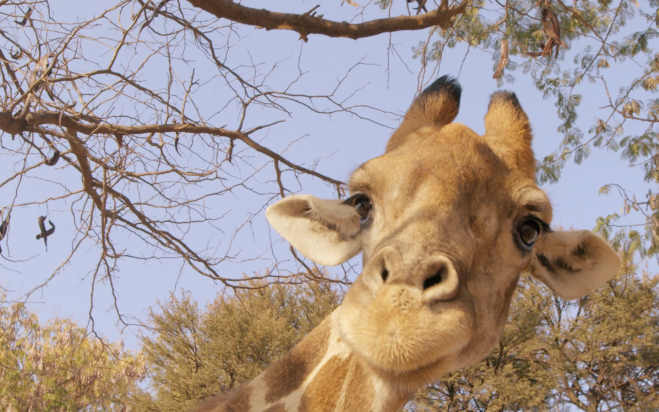
We think of giraffes as ubiquitous in Africa, but in reality there are fewer giraffes than heavily poached species like elephants.  Sir David Attenborough takes a look at efforts underway to save this species.

Giraffes are facing a ‘silent extinction’ with just 90,000 animals still roaming the African plains, far fewer than the endangered African Elephant, a new documentary warns.

Just 15 years ago there were thought to be around 150,000 giraffes in the wild but since then numbers have slumped by 40 per cent because of habitat loss and poaching.

A new BBC documentary, narrated by Sir David Attenborough, followed a conservation team as they relocated a group of 20 animals across the Nile in Uganda where it is hoped they will be safe from oil prospectors.

“These gentle giants have been overlooked,” said Sir David. “ It’s well known that African elephants are in trouble and there are perhaps just under half a million left.

“But what no one realised is there are far fewer giraffes. Giraffes have already become extinct in seven countries. They are killed for their meat and their habitats are being destroyed. Time is running out.”


Painted Dog Conservation 


Five African painted dogs have a new home in Missouri.  This small pack has moved into its own space at the Endangered Wolf Center.   The African painted dog population is under great pressure in the wild and the species only hope may be diversity preservation in zoos and centers like this one.  The center’s web cam is a good way to view this pack.

A pack of five African wild dogs — an endangered breed down to a few thousand in the wild — has a new home in suburban St. Louis.

The Endangered Wolf Center in Eureka has taken in the animals — an adult male, an adult female and their three pups. They arrived May 24 from a small zoo in West Virginia.

The center, whose mission is to preserve and protect wild canid species through managed breeding, reintroduction and education, is now among 30 facilities around the world that together house 97 African wild dogs for breeding and species survival. A spokeswoman says the center will use the two adults for further breeding.

Africa has between 6,000 and 7,000 African wild dogs, with about half living in Botswana, a southern African country. Others are in the wild are in Zambia, Tanzania, South Africa, Zimbabwe, Senegal, Namibia and Kenya, the Endangered Wolf Center said.

The dogs' large ears help them dissipate heat, the center said. Each animal's coat is unique, so the dogs can recognize each other from distances as great as a football field. They can run up to nearly 40 mph and can run down prey including gazelles, antelope, impala, kudu and wildebeest.

Sunday, June 19, 2016

DAILY QUICK READ - JUNE 19, 2016

Trophy Hunting


Can the U.S. take action to control trophy hunting in Africa?  It will be a challenge, but this report provides a great starting point for a discussion of the real (positive or negative) impact of trophy hunting on conservation.

In a new report, Missing the Mark, the Democratic staff of the House Committee on Natural Resources charges that Zimbabwe, Tanzania, Namibia and South Africa are providing U.S. officials with little evidence that taxes and fees raised from trophy hunts targeting lions, leopards, elephants and rhinoceroses provide conservation benefits and have an overall net-positive impact on imperiled species.

“You can’t make the assumption that these countries are using the funds for conservation. You have to have the proof,” said Matt Strickland, a member of the committee’s Democratic staff. “U.S. hunters are responsible for taking a lot of animal trophies from Africa and we want to make sure the Fish and Wildlife Service is doing its job in permitting trophy imports and Americans aren’t contributing to the decline of certain species.”


Alligators Are Ingrates


Saving an apex predator from extinction was an environment success, then we decide to move into their neighborhood.  The results are occasionally bad for humans, but disastrous for the gators.

The American alligator once neared extinction. By the 1950s, demand for hides and uncontrolled hunting in the southeastern United States had almost wiped out the species after a 200 million-year run on planet Earth.

Three decades later, alligator populations were fully recovered, “making it one of the first endangered species success stories,” according to the U.S. Fish and Wildlife Service.

The reemergence of the alligator came at the same time the human population also grew, both in size and sprawl, creating a dynamic with an unavoidable outcome: human and predator interaction.


Saving the Amazon


Critical to reducing the impact of climate change.  Just a beginning here, not a binding agreement.

The declaration, with 7 objectives, was signed by scientists, conservationists, government officials, academics and development specialists attending the conference. Some of the signatories included: The Ministry of Environment of Peru; Amazonas State Environment Secretariat of Brazil; the Loreto Region Direction of Production, the fisheries authority in Peru; the Wildlife Conservation Society; and several others. Key to the declaration is its assurance that it aims to work toward international agreements in which the interests of all and the sovereignty of each country are respected, and the integrity of the environmental system, particularly in the Amazon Basin, is protected.

The objectives of the declaration include: to expand the integrated river basin ecosystem management approach; to promote interdisciplinary and intercultural research agendas; to strengthen fisheries management at adequate scales; to ensure the proper management of Amazon Basin wetlands; to understand better the potential environmental impacts of development investments on the terrestrial and aquatic ecosystems of the Amazon Basin; to build an informed, committed, and empowered constituency for the conservation of the Amazon Basin; and to cooperate in good faith and with a spirit of solidarity in the implementation and further development of the objectives.

Going after deforestation in the Amazon by going after those who really gain from it.  This is how you save the environment.  Follow the money….

That was when Azeredo had an idea that even the staunchest ruralist opponents have recognized as brilliant. The state of ParĂĄ has about 250,000 ranches, and there are hundreds of supermarket chains with more than 80,000 stores spread across the country. But the link between those cattle ranches and the supermarkets is formed by just a few dozen medium and large slaughterhouse operators that are responsible for butchering the cattle and distributing the resulting “cattle products” – companies such as JBS, Bertin (later bought by JBS), Marfrig, and Minerva.

Azeredo’s plan was to turn those slaughterhouse operators into guardians against deforestation.
Prosecutor Daniel Azeredo’s idea was simple and effective. The MPF had caught slaughterhouses buying deforestation cattle and applied fines totaling two billion Brazilian real (about $500 million). But an even more powerful instrument of pressure was the fear that buying illegal beef provoked in large supermarkets, such as PĂŁo de Açucar and Walmart. With the possibility of being sued, they would rather avoid beef from ParĂĄ, which would be perhaps a fatal blow to the state’s slaughterhouses.

Azeredo and the MPF’s quest to stop illegal deforestation for cattle ranching also benefited from the pressure that Greenpeace was putting on multinational brands such as Adidas and McDonald’s in Europe, companies that bought large quantities of leather and beef. The Greenpeace campaign, called “Farra do Boi,” warned against the use of raw materials from deforestation cattle coming from the Amazon. The fear of the damage that this could cause to their reputations made these brands threaten to stop buying cattle products from sources in the region. So when Azeredo offered the agreement known as the “Beef Agreement,” the large slaughterhouses signed it – and thereby became responsible for the supervision of the farmers who were their suppliers.


20% of Plants In Danger


Climate change creating stress.  Disease and damaging insects more prevalent.

Climate change might not be the primary cause of a plant dieback event, but it certainly can tee up such events by putting plants under environmental stress. A mild winter might allow a damaging beetle to survive in much higher numbers, and if there is even moderate drought, then stress along with the primary cause of damage could trigger massive landscape-scale plant death so great that it is easily seen from space, Prof McElwain says.


Just Save One


Amir Rahim was on a tuna fishing boat about 180 nautical miles off the coast of Karachi, Pakistan, when he saw an olive ridley sea turtle trapped in a polypropylene woven bag, the Huffington Post reported. The turtle was struggling to swim with the bag dragging behind it. 

Rahim jumped into the water fully clothed to help the turtle. He wasn’t able to free the turtle while in the water so his crew mates helped him bring the turtle on board. They cut the bag off of the turtle and released it back into the water.

Rahim is a trained observer for the World Wide Fund for Nature—Pakistan. The Huffington Post reported he had “seen plenty of turtles entangle in floating fishing nets,” but had never seen one trapped in a floating bag.

Saturday, June 18, 2016

DAILY QUICK READ - JUNE 18, 2016

City Coyotes


Coyotes and humans in close proximity.  Coyotes are becoming very comfortable in urban settings.The challenge is for humans to understand how to interact with their neighbors without conflict.  It is a wildlife management issue and a political issue. 

There’s much researchers still don’t know about urban coyotes, according to one biologist who has been working to gather more scientific information on coyotes specifically in the Southern California area.

“We’re seriously lacking in a lot of scientifically based information when it comes to coyote management,” said biologist Niamh Quinn of the University of California Division of Agriculture and Natural Resources.

The urban coyote issue is complex, Quinn said, and can quickly become clouded — and heated — by feelings.  It’s very emotional and political,” she said. “It should be influenced by science and only science, not emotion and politics.”

Quinn dismisses the often-repeated layman’s theory that the coyotes are coming in “from the hills” because of the drought and are starving in the city. Several generations of coyotes now have been born and raised — and are staying — within city boundaries, she said, apparently finding more resources than they would in rural areas.

“These coyotes are (now originally) from urban neighborhoods,” Quinn said. “They’re potentially just reproducing successful generation after successful generation.”


Plastic In the Oceans


Massive islands of plastic bottles, foam and other litter.  And,it almost all comes from land-based sources.  And, the real killer isn’t what’s floating on the surface, it’s the microplastics – fragments that breakdown and enter the food chain.


The graph, provided by UK-based Eunomia Research & Consulting, shows that more than 80 percent of the annual input of plastic litter, such as drink bottles and plastic packaging, comes from land-based sources. The remainder comes from plastics released at sea, such as lost and discarded fishing gear.

Significantly, Eunomia was able to come up with a new estimate of annual global emissions of “primary” microplastics, such as microbeads, fibers or pellets. (“Secondary” microplastics are the result of larger pieces of plastic breaking down into smaller pieces.)

The firm calculated that emissions of microplastics range from 0.5 to 1.4 million tonnes per year, with a mid-point estimate of 0.95 million tonnes. Vehicle tires are the biggest culprits, releasing 270 thousand tonnes of debris into our waterways annually.

These tiny non-biodegradable pieces of plastic are a cause for worry, as they are being gobbled up by plankton and baby fish like junk food, and works its way up the food chain. Microplastics have been found in in ice cores, across the seafloor, vertically throughout the ocean and on every beach worldwide. As EcoWatch mentioned previously, microplastics are also very absorbent, meaning they pick up the chemicals it floats in.


Roughly 8 million tons of plastic is dumped into the world’s oceans every year, and according to a new study, the majority of this waste comes from just five countries: China, Indonesia, the Philippines, Thailand and Vietnam.

It appears that these five countries are responsible for up to 60 percent of the marine plastic entering our oceans, according to Stemming the Tide, a study released last month by the Ocean Conservancy and McKinsey Center for Business and Environment.

Why are these parts of Asia leaking so much plastic? Well, as the study suggests, these emerging countries are experiencing rapid economic growth, reduced poverty and improved quality of life. This development is, of course, fantastic. However, as these economies grow, so does the consumer use of plastic and plastic-intensive goods.

The caveat of this increased plastic demand is that these countries do not yet have waste-management infrastructures that can tackle the accompanying excess waste.


 ExxonMobile – Liars


Exxon trying to pretend that they didn’t know in the 1970s that fossil fuels were going to increase global C02 build-up.  No, they did and instead of looking for a solution they went to work developing a network of phony think-tanks and paid “expert” deniers.  I look forward to the results of the 17 state investigation already in progress – and hope for more to come.

Acting like a wounded and cornered beast, ExxonMobil has launched what appears to be a blatantly retaliatory and frivolous lawsuit against Massachusetts Attorney General Maura Healey.

Beneath a very thin veil, this legal maneuver by Exxon is seemingly an effort to intimidate any and all who seek to hold the oil giant accountable for its multi-million dollar campaign to attack climate science and sow doubt through decades of deception.

Just to remind everyone – 17 Attorneys General are investigating what Exxon knew about climate science and when, as well as what the company has done to potentially mislead policymakers and the public in order to delay action to address climate change.

Exxon has claimed that there has always been uncertainty within the company about the role of fossil fuels in causing climate change.

Yet, as InsideClimate News and the LA Times and Columbia School of Journalism and the Center for International Environmental Law and other investigations have pointed out, Exxon and others in the oil industry had advanced knowledge of the link between fossil fuel combustion and global warming decades ago.

View From The Top


There are two types of auroras - Aurora Borealis, which means 'dawn of the north', and Aurora Australis, 'dawn of the south.'

The lights are created when charged particles from the sun enter Earth's atmosphere.

Usually the particles are deflected by the Earth's magnetic field, but some enter the atmosphere and collide with gas particles.

These collisions emit light, in many colours although pale green and pink are common.

Friday, June 17, 2016

DAILY QUICK READ - JUNE 17, 2016

Not All Coral Reef Are Dying


Some reefs are unexpectedly thriving and not because they are isolated and uninhabited.  On the contrary many of the healthiest coral reefs are at the center of human communities who work diligently to care for the reefs, because the health of the reef is critical to the success of the community. 

Amid the gloom and tears, Cinner and his colleagues went searching for bright spots. Mimicking Sternin, they looked for reefs that house more fish than expected, relative to other reefs facing comparable pressures. And their surprising results are upending traditional assumptions about what makes a healthy reef.

Contrary to what you might think, the bright spots weren’t all remote reefs, where humans were absent or fishing was banned. Instead, most were home to lots of people, who rely heavily on the corals and who frequently fished. They weren’t leaving the corals and fish alone; instead, they had developed social norms and institutions that allowed them to manage the reefs responsibly.

…people in the bright spots were dependent on the reefs, were engaged in managing them, and did so via taboos and institutions. Consider Karkar Island at Papua New Guinea. The local people practice marine tenure—a system of oceanic property rights, where villages can exclude their neighbors from accessing their particular plot of sea. They also rotate their harvests, closing off patches of reefs for months or years. (They do so to give the fish time to lose their fear of humans; coincidentally, the practice also allows fish to recover.)

Communities working to preserve nature because it is their best interests.  It works and needs to be nurtured.


Mobile Phones Wreaking Havoc


South Africa’s parks struggling with mobile phone driven apps causing traffic havoc.

Tourists are using mobile phone apps that allow users to share tips on animal sightings in South Africa’s national parks, and that’s a cause for concern, according to park officials.

South African National Parks is looking for a way to shut down such apps, claiming they “induce an unhealthy sense of eagerness for visitors to break the rules.”

“As an organization, we appreciate the fact that technology has evolved and that guests are taking advantage of it,” Hapiloe Sello, SANParks managing executive of marketing, said in a statement. “However, this is compromising the values of good game viewing in national parks.”

Parks officials said that since people starting using these mobile apps, incidents of speeding, wildlife roadkill, and road rage have all increased around animal sightings.


Brexit – Great Britain Leaving the European Union (EU)


We’re not sure of the ramifications of a British exit from the EU (Brexit).  Lots of indications that they will be detrimental for the British and possible for the world economy.  Based on the following polling data, what is clear is that many of the people in favor of abandoning the EU are identical in philosophy (and ignorance) to those in the United States who support Donald Trump.  To quote Dean Wormer…”fat, drunk and stupid is no way to go through life.”

British people backing a leave vote in the EU referendum are almost twice as likely to believe that climate change does not have a human cause, according to a new poll.

Brexiters are more likely to think the media exaggerates how settled climate science is; distrust scientists; have sympathy with creationism; oppose onshore windfarms and support fracking.

The polling also found 44% of leavers thought scientists had too much influence on British politics against 25% of remainers, and 46% of leavers agreed that people who question the theory of evolution “have a point” compared to 36% of remainers.

On energy, leave voters were more likely to oppose onshore windfarms in rural areas (36% versus 21% of remain voters), and more likely to support increasing the use of fracking to extract shale gas (40% versus for 35%).

“It’s disheartening to see that so many people still refuse to acknowledge clear scientific knowledge, thereby undercutting the efforts of Britain’s world-leading scientists,” said Assaad Razzouk, CEO of cleantech firm Sindicatum Sustainable Resources, who commissioned the poll.

“Climate change denialism and anti-evolutionism are obvious hindrances to productive discussions about the future of Britain, Europe and indeed the world.”


Find Your Bank In This Report


Major banks continue to fund environmentally damaging coal, oil and gas projects that make meeting global warming limits nearly impossible.  And, the banks apparently have no concern for the human damage that these projects will cause.
In the past three years, the North American and European commercial and investment banking sector has engaged in fossil fuel financing practices that are deeply at odds with the global climate agreement reached at COP 21 last December.  The Paris Climate Agreement’s target of limiting warming to 1.5°C (or, at most, 2°C) above pre-industrial levels will require a rapid decarbonization of the global energy system. Distressingly, levels of fossil fuel financing by major North American and European banks between 2013 and 2015 are incompatible with these climate stabilization targets…

These “sacrificial” communities include towns near blasted off Appalachian mountaintops, coastal regions off the Gulf exploited for export terminals and offshore drilling, First Nations whose lands and waters are contaminated by tar sands mines in Canada, and communities from Poland to Indonesia to Bangladesh who breathe contaminated air and drink contaminated water from smokestacks, oil spills, and other routine disasters caused by fossil fuel infrastructure. And with global greenhouse gas concentrations rising steadily, the atmosphere itself and acidifying oceans are also becoming
sacrifice zones, with devastating consequences for low-lying island nations and coastal communities worldwide.


Speaking of Environmental Damage


Fracking is becoming a serious political issue in the United Kingdom (UK).  The shale gas companies are looking at very questionable practices and regulators and politicians are working hard to hide the details.

A UK shale gas company is considering dumping waste water from fracking in the sea, emails from the company show.

Ineos, which owns the Grangemouth refinery and holds 21 shale licences, many in the north-west, North Yorkshire and the east Midlands, has said it wants to become the biggest player in the UK’s nascent shale gas industry.

Dr Paul Johnston from the Greenpeace Science Unit argued that discharging “huge quantities of water loaded with metals and radioactivity and chemical constituents” into “sensitive marine environments” is “a retrograde step as far as environmental protection”.

But the industry said the water could be treated and disposed of safely.

Much as in the United States, hiding the dangers of fracking from the communities where wells are installed is the standard mode of operation.  Pressure is growing on the UK government to release a report into the impacts of shale gas fracking on the UK's carbon emissions.  So far....no report.

The Committee on Climate Change, which advises parliament on meeting the UK’s carbon targets, submitted the report in March. It covers the expected impact of exploiting the UK’s onshore oil and gas resources on nationally set greenhouse gas targets.

It can only be published when the secretary of state for energy has responded.

Green activists suspect that ministers are wary of the potentially explosive impact of the report, which is likely to find that fracking would be an addition to the UK’s carbon dioxide output, if pursued to the extent that ministers support. As well as being a wholly untapped new source of fossil fuel, and thus carbon, fracking has also been found to release more carbon than conventional oil and gas exploration, because of the difficulty of production and the dangers of leakage.

Will Resume Shortly

 Taking a break from blogging.  Worn out by Trump and his fascist followers, Covid-19 pandemic fatigue, etc.....