Showing posts with label conservation. Show all posts

Friday, October 14, 2016

Conservation vs Slaughter - The US Election

Hillary Clinton has been in awe of elephants since a trip to Africa nearly 20 years ago.  As Secretary of State she pushed an aggressive conservation agenda for the Obama Administration and implemented an $80 million anti-poaching program through the Clinton Global Initiative.  She is committed to wildlife conservation.

“I love the way…the matriarch of the family looks for everybody, I just have such a sense of connection to elephants and it just breaks my heart that they are being poached and murdered and babies being left to fend for themselves,” Clinton said on a portion of the show that only aired on Facebook.

Clinton’s affinity for elephants is not widely known or reported. But during her tenure as Secretary of State in the Obama Administration, she helped bring the issue of global wildlife trafficking out of obscurity.

“International criminal syndicates are orchestrating the slaughter of many of the world’s iconic wildlife species and profiteering by marketing ivory, rhinoceros horn, and other wildlife parts in the U.S., Asia, and Europe,” said Jorge Silva, a spokesperson for the Clinton Campaign. “Many of the criminal syndicates have ties with, and are helping to fund, terrorist groups around the world, and also are engaged in human, drug, and arms trafficking.”

When asked for input regarding Donald Trump position on elephant conservation The Guardian got no response.  Of course, you could infer the Trump position on conservation from this photo of his namesake son, taken just after Trump Junior had shot and killed an elephant. 

 The Trump campaign did not respond to repeated requests for its position on elephant conservation or the global wildlife trade, but its website mentions neither. This is not surprising given the website lists very few positions regarding any environmental issues, including making no mention of climate change – although Donald Trump has claimed that climate change was a hoax invented by the Chinese.

In 2012, media leaked photos of Donald Trump’s sons, Donald Trump Jr. and Eric Trump, taken during a big game hunt safari in Zimbabwe. In one image, Donald Trump Jr. stands next to an elephant he shot to death and holds up its severed tail. Cutting off an elephant’s tail is traditional in some African cultures where the hair is made into a bracelet.

Monday, October 3, 2016

Good For the Rufous, Good For the Forest

A collaboration between conservation groups and forest product companies may result in healthier forests and improved opportunities to conserve species that face uncertain futures.

What can a hummingbird reveal about the health of a forest?

That's a key question conservationists and forest products companies will be trying to answer later this year on private forest lands in southwestern Oregon. There, in the rugged forests of the Klamath Mountains, American Bird Conservancy will collaborate with the Sustainable Forestry Initiative (SFI), Klamath Bird Observatory, and the National Council on Air and Stream Improvement. The partners are undertaking a two-year project to assess and enhance forest management for more than 15 bird species of special concern—including the Rufous Hummingbird.

Given how many acres forest products companies influence there, they can contribute to turning the trends around for Rufous Hummingbird and other birds that depend on various types of forest habitat to survive. By managing with an eye toward biodiversity, these companies create conditions that many birds need for successful breeding, migration, and wintering.

The hummingbird and other focal bird species, in turn, play a crucial role in helping forest products companies manage their acreage sustainably. Scientists have found that certain bird species' requirements for healthy habitat reflect what many other animals need, too.

If it's good for the birds, it's good for many other critters—and a sign of a thriving, well-balanced forest ecosystem.

Thursday, September 1, 2016

DAILY QUICK READ - SEPTEMBER 1, 2016

Water is Life


The study pertains to groundwater which is important to the region, but monsoon fed rivers continue to be a major source of agricultural water.  Still, with the recent conclusions regarding glacier melt in the Himalayas, the availability of clean, safe water is going to be compromised for nearly two billion people.

Sixty per cent of the groundwater in a river basin supporting more than 750 million people in Pakistan, India, Nepal and Bangladesh is not drinkable or usable for irrigation, researchers have said.


The biggest threat to groundwater in the Indo-Gangetic Basin, named after the Indus and Ganges rivers, is not depletion but contamination, they reported in the journal Nature Geoscience.
“The two main concerns are salinity and arsenic,” the authors of the study wrote.

Up to a depth of 200m (650ft), some 23% of the groundwater stored in the basin is too salty, and about 37% “is affected by arsenic at toxic concentrations”, they said.


Sign The Petition


Then share it with your on-line communities.  Will it do any good?  Who knows, but every little bit can help.

Hello, my name is Jane Goodall, and I’m here to ask for your support to end wildlife trafficking. I spend about 300 days every year traveling and talking to people about how we can help animals, but I know the power of social media can connect far more people much more quickly than anyone could do on their own. Please help me end wildlife trafficking.


Greed and the desire for increasingly rare “trophies” have resulted in a boom in illegal wildlife trafficking. This is a gruesome trade that is rapidly pushing the earth’s endangered species toward extinction. I’m meeting with some of the top conservation leaders in the world this year, and urgently need your support to tell them you want wildlife trafficking to be a priority for the international community to focus on.


Here’s Something Else You Can Do


It's estimated that 100 elephants are poached every day for their tusks and more than 1,000 rhinos are killed every year for their horns, meaning both could be extinct within the next decade or two. Other animals like tigers, snakes, pangolins and turtles have suffered major population loss thanks to poaching for their skins, hides, bile and more.

While there are wonderful organizations doing what they can to crack down on the poaching and selling of these animals, there are many people like you and me who want to contribute to the fight, too. Australia’s Taronga Zoo and TRAFFIC, the international wildlife trade monitoring network have created an app that lets us do our part.

Called Wildlife Witness, the app lets users submit information and photos of any suspected hunting, trapping or selling of endangered animals by pinning the incident to a virtual map. The submission then gets forwarded to wildlife authorities who will investigate it.


I’m Really Going to Miss This Guy


President Obama has set aside more land for wildlife conservation than any previous president.  Just think what could have been accomplished if Republicans put our national interests ahead of politics.

President Obama gave the keynote address at the 20th annual Lake Tahoe Summit, 20 years after President Bill Clinton spoke at the inaugural summit that led to a massive investment of public and private funds in the interest of reversing the decline in clarity of the pristine waters of the famed Sierra lake.


"The conservation mission is more urgent than ever," he said. "We made it a priority from day one, setting aside more acres than any administration in history."

In the last week alone, the president created two national monuments on opposite ends of the nation, protecting a swath of land in the Maine North Woods, while carving out more than half million square miles to expand the Papahanaumokuakea Marine National Monument in the waters north of Hawaii.

But Obama argued that conservation of acres alone is not sufficient with the daunting threat of climate change looming.

"Conservation is more than just sticking a plaque on a sign and calling it a park," he said. "We need to embrace the conservation of diverse lands and waters because it will help us build resilience to climate change."

Wednesday, June 15, 2016

Bats**t Crazy

Since April 11,000 human residents of the tourist town of Batemans Bay on the southeast coast of Australia have been coping with an inundation of 140,000 bats, the grey-headed flying fox (Pteropus poliocephalus), Australia largest bat.  The bats have been returning to Batemans Bay at this time of year since 2012, roosting in large trees in a local nature preserve and adjacent golf course. 
The houses are covered in guano and those who venture outside soon feel a disgusting “sprinkle of something”.
Then there’s the early-morning screeching, so excruciating that resident Danielle Smith said it compelled her to go on anti-depressants.
Her two-year-old can no longer play in the backyard and “won’t even sleep in his own bed anymore because he’s so frightened of the bats”, she said.
“I can’t open my window at all because the smell is so bad,” Smith said. “We can actually taste it — that’s how strong it is.”

Flying foxes are not migratory, but they do travel across their Southeastern Australian coastal range. The foxes are fruit eater, preferring to forage at night in the forest.  Their travels are forage driven as they follow their food supply.

This year’s Batemans Bay colony is nearly triple the size of the colonies in previous years.  The increase in colony size isn’t due to an increase in overall flying fox numbers, which have decreased by 30% since 1990.  In fact, what it represent is a decrease in flying fox habitat.  Australia is a world leader in deforestation, aggressive cutting down native forest in the entire range of the flying fox.  As the fox bats territory is reduced colonies cluster together to take advantage of the available resources.  
“It’s an unprecedented event because we’re in uncharted territory with how to manage it,” the mayor, Lindsay Brown, said.
Government science agency, the CSIRO, estimates there are 680,000 grey-headed flying foxes in Australia, meaning Batemans Bay has been home to one in five of them. Each bat can weigh a kilogram with wing spans exceeding a metre.
They fly out at dusk to feed on flowering spotted gum and bloodwood trees in forests, then wake locals with a cacophony of screeching on their return to town before dawn.
Thousands fly en masse into power lines, knocking out power to the entire town. This happened not just once but on nine consecutive nights in April.

Batemans Bay will survive its annual flying fox visit, although plans are in place to cut down trees to create a buffer zone for the town.  Unfortunately, it was the cutting down of trees that have led to this situation in the first place.
Bat colonies in Australian urban areas have become increasingly common since the 1990s, Sydney University bat researcher Kerryn Parry-Jones said.
“We have … an ecological problem which has been generated over probably 50 years, and it’s only now people are becoming aware of it,” she said. “And now they want a complete and utter solution within 24 hours.”

 Yes, Australia, you have a problem.

Sunday, June 5, 2016

China's "Arsehole"

The long border between China and Myanmar has always been porous.  A variety of illegal goods find safe passage between to two countries.  On the Myanmar side, the town of Mongla typifies the nature of the illicit and unrestrained cross-border trade.  Although in Myanmar, Mongla is far more connected to China.
The town - virtually an independent fiefdom operating on Chinese currency, electricity and mobile phone networks - is run by Sai Leung, also known as Lin Min Xiang, who has his own 3,000-strong National Democratic Alliance Army.
Through its Chinese connections and the lack of central government control, Mongla has become a border town where anything goes.
Pangolin skins for sale in Mongla
Every day thousands of Chinese tourists pour over the border to Mongla… a haven for gambling, transvestite shows and illicit drugs. Fondly known as the “arsehole of China” (中国的肛门), this former backwater has also become the centre of the region’s booming illegal wildlife trade.
The most ubiquitous representative of the illegal animal trade in Mongla is the pangolin.  Sold both live and dead by the roadside and in open air markets.  Pangolin fetuses soaked in wine are sold in shops, where dressed out pangolin bush meat is also for sale.  Higher end shops sell pangolin scales at prices approaching rhino horn levels.

The pangolin is the world’s most widely poached and illegally traded animal.  Pangolins represent an estimated 20% of the global wildlife black market.

Unfortunately, the pangolin has been the world’s most anonymous extinction candidate.  Pangolins are reclusive, mostly nocturnal insectivores that once ranged across Southeast Asia, India and Africa.  Today, there are eight species of pangolins still extant in the wild.  Of those, the four Asian species have been hunted close to extinction.  With the supply of pangolins in Asia depleted, poachers and smugglers are turning to Africa to fill the void.

Pangolin meat is considered a delicacy in China and Vietnam.  Often, at a meal to celebrate the close of big business deal, a panolin is slaughtered at table side. Pangolin fetuses pickled in wine are sold both as curatives and as displays of ostentation. 

Unfortunately for the pangolin its most distinctive characteristic is the protective scales that cover its body.  Made of keratin, the same material as human hair or nails, its covering of scales make the pangolin unique among mammals.  Pangolin scales are considered to have the same sort of curative power as rhino horn and are coveted by the same market.  

A recently published study pointed to the centrality of Mongla to the pangolin trade.
There have been a few seizures in other parts of northern Myanmar around Mandalay and across the border in Yunnan province in southwest China, but no real action to stem the daily flow over the border.  Between 2010-2014, pangolins and their parts worth US$3.09 million in Myanmar were seized according to CITES data, but the authorities have not reported a single case to the international body. Seizures only reflect a fraction of the total trade, indicating the size of the problem.
Myanmar and China are both signatories of the CITES treaty banning the international trade in wildlife.  Myanmar has virtually no control over its border area with China.   And, despite commitments to stop the trade, China has done little to crack down on the illegal trade in Mongla. Nor has China (or Vietnam) made enforcement of existing laws against trafficking in either country. Until China steps forward, pangolins will continue to be sacrificed in the markets and shops of Mongla.

The pangolin has some strong advocates, here is a list of some of them.  They could use your support.

The Tikki Hywood Trust.

Save Pangolins.

IUCN SCC Pangolin Specialist Group.

African Wildlife Foundation.

Here's an example of the effort made to save just two pangolins.    It's the hope behind this blog.


Wednesday, June 1, 2016

Who Needs Water Anyway?

This winter's El Niño event resulted in a lot of rain on California and left the mountains with a nearly normal snow pack that will fill the rivers as it melts. The California drought is over, right?   Guess again.  Climate change is only going to make things worse, in particular for the 40 million people who import nearly all of their water from the Colorado River basin.  This includes the most populous areas of California, Nevada and Arizona. 
1984
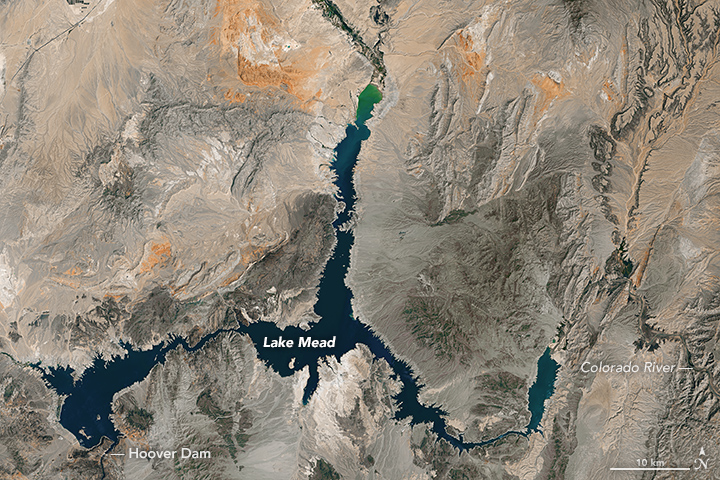
As it happens, there is less of Lake Mead than there ever has been before, which is a problem because Lake Mead is the largest reservoir in the United States. Created by the construction of Hoover Dam, a big government project of the past, Lake Mead provides drinking water to four states, including California. In California, it supplies water to Los Angeles, a fairly good-sized port city on the Pacific coast. There is now only 37 percent of Lake Mead left.
The American Southwest—and the Los Angeles area in particular—are natural deserts.
2016
Only the miracle of engineering has made them habitable. Quite simply, we created human space in a place that, left to its own devices, would have been suitable only by cactus and lizards.
There is another concern regarding the Colorado River basin and the future viability of the basin’s capacity to support the tens of millions of people and the vast agricultural lands that depend on keeping the water flowing.  Since 2004, the western drought has also driven increased use of ground water.  Two full Lake Mead's worth of water pulled from the ground.
Monthly measurements of the change in water mass from December 2004 to November 2013 revealed the basin lost nearly 53 million acre feet (65 cubic kilometers) of freshwater, almost double the volume of the nation’s largest reservoir, Nevada’s Lake Mead. More than three-quarters of the total — about 41 million acre feet (50 cubic kilometers) — was from groundwater.
“We don’t know exactly how much groundwater we have left, so we don’t know when we’re going to run out,” said Stephanie Castle, a water resources specialist at the University of California, Irvine, and the study’s lead author. “This is a lot of water to lose. We thought that the picture could be pretty bad, but this was shocking.”
Throughout Central and Southern California groundwater is being pumped at prodigious volumes to compensate for the impact of the state's prolonged drought.  The California Central Valley is literally sinking as agricultural user dig more and deeper wells to pump out ground water to keep the fields and animals alive. 
As Californians have sucked up trillions of gallons of groundwater over the last century, many are now using water that’s more than 20,000 years old.
Experts believe that it will take decades to start to significantly reverse the effects of overpumping in many areas — but that is if folks can start to talk about water without too much fighting.
We could bring about a different future than the one the Southwest currently faces, but do we have the will to do so?
As population growth and heavy demand for water collide with hotter temperatures and reduced snowpack in the future, there will be an even greater mismatch between supply and demand, said Kelly Sanders, an assistant professor at the University of Southern California who specializes in water and energy issues.
“The question becomes how to resolve this mismatch across states that all depend on the river to support their economic growth,” Sanders said. She expects incentives and markets to help ease some of the strains on water supplies, “but it is going to be tricky to make the math work in the long term.”
Do you think Donald Trump knew any of this when he proclaimed that there was no drought in California? 


Tuesday, May 31, 2016

A New 100 Years War


Donald Trump declared that if elected President, he would wage an all-out war against national and global climate action. On Friday, he went so far as to deny the reality of California’s devastating drought.

Trump said he would kill the EPA’s Clean Power Plan and all domestic climate-related regulations. And he said, “We’re going to cancel the Paris climate agreement” — truly humanity’s best if not only chance to avoid catastrophic irreversible climate change lasting 1000 years.

If President Trump does what he says he will, then America and the world will be doomed to decades, or more likely, centuries, of strife and conflict from catastrophic climate change from the synergistic effect of soaring temperatures, Dust-Bowlification, extreme weather, sea level rise and super-charged storm surges. These climate impacts will create the kind of food insecurity that drives war, conflict, and the competition for arable and habitable land.

Ignorance is not a virtue in the commander-in-chief of the most powerful nation on the planet.  The military recognizes the danger inherent in man-made climate change.

Man-made climate change appears to be even more dangerous: It is happening much faster than cyclical changes in the past, and the tectonic shifts are happening in unprecedented combinations. Global warming is melting the Arctic, raising sea levels, driving bugs carrying diseases like Zika, malaria, and dengue fever into virgin environments, and making dry places drier and wet places wetter — all at once. The Pentagon now defines climate change as a “present security threat, not strictly a long-term risk.”

A President Trump will have many allies in Congress who will support his ignorance. 

The U.S. House of Representatives, however, has actively acted to prevent the military from considering these risks. Back in May, the House passed an amendment sponsored by Rep. David McKinley (R-WV) that would have forbidden the Pentagon from using any of its funding to address the national security impacts of climate change.

For Republicans coal mining and oil extraction Trumps the threat of global war every time.

Monday, May 30, 2016

DAILY QUICK READ - MAY 30, 2016

Perhaps the pitch for a new horror movie.   


When Carol Howarth parked her Mitsubishi in the town of Haverfordwest, Wales, to do some shopping, little did she know the mayhem that would ensue.

While she attended to her errands, a swarm of 20,000 bees was drawn to her car. A local man, Tom Moses, saw the buzzing hubbub and concerned that the bees might be poorly handled, called in a team of beekeepers.

With the beekeepers on the job, by the time Howarth returned the situation appeared to be resolved.

But, no. The swarm kept her in their sights and managed to track her down.

"The next day I realized that some of the bees had followed me home,” she said. So she summoned the beekeepers, who arrived ready for rescue.

The bees had a motive.


Rats can't vomit.  


They have been know to induce that response in humans.

Biologically, a rat is unable to vomit because of a powerful and effective gastroesophageal barrier, research shows. This barrier consists of crural sling, the esophageal sphincter, and the intra-abdominal esophagus. Researchers found that the pressure at the two ends of this barrier is greater than the pressure found in the thorax during any phase of the breathing cycle. This pressure, thus, makes it impossible for rats to reflux.

While they do lack the ability to vomit, an integral part of many species’ defence mechanisms against toxins, rats seem to have adapted by strengthening their first line of defence. Researchers note that rats have a very keen sense of smell and taste and will easily avoid foods which might cause a vomiting response in other species. Some speculate that vomiting has become redundant and lost over time because rats seem to avoid dangers at the hand of toxins so well. Alternatively, rats developed a hyper-sensitive food avoidance to compensate for the inability to vomit. It’s clear at the moment which came first.

Evolution is a incredible thing.


GLTFCA 


Conservation is costly and it takes time.  What are we willing to do to save wildlife?  Expanding the Greater Limpopo Transfrontier Conservation Area(GLTFCA) is critical to sustaining wildlife diversity in Southern Africa.

When researcher Kristoffer Everatt spotted a movement in the grass while conducting field work in Banhine National Park in Mozambique in July 2015, he wasn’t sure what it was. Stalking carefully towards the unknown animal, he finally parted the grass to stare into the eyes a beautiful black-maned lion crouched about 4metres away.

“We stared at each other for a few heart-pounding seconds until I took the plunge and bluff charged him! He turned away and ran off growling his displeasure into the bush. He had just killed an aardvark and hadn’t yet begun to eat. I was so pleased to find him there, in south-western Banhine eating wild meat,” shared Everatt.

The 7000 square kilometre park in Mozambique’s northern Gaza Province was proclaimed in 1973. Along with Zinave and Limpopo national parks in Mozambique, Gonarezhou National Park in Zimbabwe and the Kruger National Park in South Africa, it is part of the Greater Limpopo Transfrontier Conservation Area (GLTFCA).

What will it take to restore these parks?

“Funding and plenty of it,” says van Lente. “As Mozambique is one of the poorest nations in the world, there is a lot of competition for funding. As such, “parks like Banhine and Zinave will be dependent on external funding for a long, long time”.


This is kind of a big deal.


Daniel G. Nocera, the Harvard professor who made headlines five years ago when he unveiled an artificial leaf, recently unveiled his latest work: an engineered bacteria that converts hydrogen and carbon dioxide into alcohols and biomass. One can be used directly as fuel to power vehicles that run on conventional fuels, while the other can be burned for energy.

According to a Forbes report, a one-liter reactor packed with Ralston e. can capture 500 liters of CO2 per day and produce around 2 kilowatt-hour of energy. Because the fuel is destined to be burned, the captured CO2 is returned back to the atmosphere. Being technically carbon-neutral, the resulting fuel is more environmentally friendly than conventional fuels based on petroleum or corn-derived ethanol which has a questionably positive carbon life cycle.


The Selfish Green

First broadcast in 2004, this discussion is still relevant today.


Changing the world is possible.  We need the will to take action.

Sunday, May 29, 2016

Tragedy In Cincinnati – Gorilla dies.

A four year old child, apparently without meaningful adult supervision gets into a western lowlands gorilla exhibit at the Cincinnati Zoo.  To protect the child, zoo personnel are force to kill the gorilla. 

Sadly after this tragedy, PETA jumps in with their anti-zoo campaign.  PETA has no programs in Africa to protect or preserve gorillas in the wild.   You don’t have any issue with the destruction of the gorillas’ habitat or the rampant poaching of gorillas from the wild, but you will jump on board this tragedy to boost fund raising.  Hypocrisy your name is PETA. 

Contrast PETA's self-serving publicity with the feelings of the zoo professionals devastated by the tragedy.


Those are some of the words the Cincinnati Zoo & Botanical Garden used in a contrite explanation for the death of Harambe, a 17-year-old western lowland gorilla killed on Saturday to save a boy who slipped into the zoo's habitat.

The boy, 4, was released unhurt from a Cincinnati hospital Saturday and the zoo opened on Sunday. Gorilla World, home to nine western lowland gorillas, was closed.

The boy was in "imminent danger," leaving the zoo's Dangerous Animal Response Team with no option but to shoot the gorilla, zoo director Thane Maynard said in a statement on Facebook. Tranquilizers may not have taken effect in time to save the boy while the dart might have agitated the animal, worsening the situation, Maynard said.

The boy apparently slipped through a fence and fell some 15 feet to a shallow pool in Harambe's enclosure. Video shot by another zoo visitor showed Harambe dragging the boy like a rag doll through the water from one end of the habitat to another.


Tragic.  Even more tragic is the fact that so many people will send money to PETA instead of to conservation organizations actually working to save gorillas in the wild.  Here a just a few of them:

Friday, May 27, 2016

It's A Dog's Life - Herding Cougars and Bears

The wildland-urban interface is often the line between life and death for animals like bears and cougars.  Bears in particular are easily attracted to areas where garbage is easily accessible.  The failure of humans to effectively secure garbage and other food sources place bears and humans in a situation where the bear is likely to be killed to “insure public safety.” 

Often the first step is to relocate a bear that has become accustomed to foraging in the neighborhood trash cans.  Unfortunately, 90% of relocated bears return to the neighborhood food sources within weeks of their relocation.   As an end result the bear is often killed.

Several Western states are trying a different approach to managing the wildlife-human interface.  Washington, Idaho, Montana, Nevada and California have gone to the dogs for help.  Specifically, each of those states are utilizing Karelian bear dogs as a key component of bear management.   In Washington state a team of Karelians work at a variety of wildlife management tasks.  

Barking at bears, romping through the forest, sniffing for poaching evidence, getting petted by a child and maybe cooling off with a swim in the Pend Oreille River. 
 It’s all in a good day’s work for Jax, a 1-year-old Karelian bear dog employed by the Washington Department of Fish and Wildlife. 
“The beauty of this breed is that Jax can be calm and licking the fingers of a kid one moment and then turn it on when he’s on the ground scaring the heck out of a bear,” said Keith Kirsch, the Spokane Region Fish and Wildlife police officer who trains, houses and handles Jax full time. 
The agency’s six Karelian bear dogs are being used across the state for wildlife research, enforcement and for conditioning bears, cougars and moose to avoid humans. The dogs also are ambassadors and conversation starters for public wildlife education.

Karelian bear dogs are considered national treasures in Finland.  Bred to assist in the hunting or bear, lynx and moose, they are fearless.  Yet, their hunting behavior can be modified and they can be invaluable assistants in many critical aspects of wildlife management,
"They have the genetics to do it all very well,” said wildlife biologist Rich Beausoleil, the agency’s bear-cougar specialist in Wenatchee.
Beausoleil handles a Karelian named Cash that’s been trained for a variety of work. In some cases, Cash will scent bears and cougars and chase them until they go up a tree so they can be tranquilized for wildlife study and collaring without having to be trapped.
“Cash has dealt with 500 bears and 130 cougars so far in his career and saved a lot of staff time,” he said. 
Bears and cougars are routinely killed by fish and game personnel when they get to close to human developments.  The use of Karelian bear dogs to locate and condition these animals is a safe and humane way to save them.

By the way many of these programs are self-funded.  You can help them out here and here.

Help Support N/a'an ku sê

Two Projects to Help N/a'an ku sê - Please Help


Only four days to go! Please contribute to Joris Hutchison's project for the sanctuary.

Buy a shirt or make a contribution, it will make a difference in many lives.


And please consider adding some funds to this longer term project.

Check out this GO FUND ME page.  Contributions here go to the purchase of supplies and training equipment not available in Namibia.  These funds will provide enrichment for many of the animals that can not be released back into the wild for health or animal safety reasons.


More about N/a'an ku sê.

Conservation through innovation

Our mission is to conserve the land, cultures and wildlife of Namibia, Africa. We aim to achieve this through encouraging participation, education and innovative activity.

Mission-Wide-100px

"Free Willy" was a movie.

How misguided is the movement to place SeaWorld's killer whales in pens?  Pretty misguided and most likely detrimental to the animals.  "Free Willy" was a movie, but there was a real whale involved named Keiko.  Science, animal behavior and conservation should be the guides.
In a paper that reviewed the attempts to release 'Keiko' published in Marine Mammal Science the authors concluded:   
"The release of Keiko demonstrated that release of long-term captive animals is especially challenging and while we as humans might find it appealing to free a long-term captive animal, the survival and well being of the animal may be severely impacted in doing so." (Simon, Hanson, Murrey, Tougaard, and Ugarte. 2009).
As stated above, SeaWorld displays 26 whales in the USA of which only 5 where were obtained by wild capture.  The last was caught in Iceland in 1983 over 30 years ago.  None of these animals are suitable for release and as the experiment with 'Keiko' reveals any attempts are likely to badly fail; a position supported by Jean-Michel Cousteau who organisation Ocean Futures was directly involved in the 'Keiko' release project.
Sea pens for marine mammals sounds like a humane compromise.  If you want to put the whales in jeopardy.
Perhaps one of the most irksome comments that come from the animal-rights community and self-styled marine mammals expert is that of the use of sea pens.  
Of course, it is not the case that marine mammals have not been successfully house in sea pens, as many facilities of this nature exist worldwide.  Nevertheless, the misguided view that these facilities are promoted as the panacea to alleged welfare problems in facilities with closed life-support systems (LSS) is erroneous.  In addition, and as is so often the case in these matters, this subject is more complicated than it appears.
Therefore, it can be seen that once again those protesting against the care of marine mammals in human care and demanding their release to coastal sea-pens are at misguided and have not fully considered the animal welfare implications of such schemes.


Thursday, May 26, 2016

Big Oil's Inconvenient Truth

Oil companies are facing an inconvenient truth.  Their business model is predicated on extracting every last drop of oil from the planet despite the potential for that activity to destroy the planet.  It might be hard for the average person to understand how turning the Earth into a wasteland to insure corporate profits is the responsible thing to do, but that appears to be the strategy that ExxonMobile has adopted. 

Rex Tillerson, the boss of oil giant ExxonMobil, said cutting oil production was “not acceptable for humanity” as he fought off shareholders’ and activists’ attempts to force the company to fully acknowledge the impact of climate change on the environment and Exxon’s future profits.

Having worked for decades to fund and promote climate change denial, it is obviously difficult for ExxonMobil’s management to deal with shareholders who suggest that the company needs to have a plan to mitigate the impact of fossil fuels on climate change.  And, more critically to the companies investors, to recognize that ExxonMobil’s business strategy will lead to a corporate extinction event as surely as the one that made it possible for dinosaurs to ensure its current profits.

During a long and fractious annual meeting in Dallas on Wednesday, Tillerson, who serves as Exxon’s chairman and chief executive, beat back several proposals to force the company to take more action on climate change.

The one thing I know about technological change is that it takes longer to implement than expected but that once implementation begins, it can become an avalanche.  Renewable energy is moving from the slow initial penetration to the avalanche phase.  So will the energy world of 2040 conform to Tillerson’s vision.

Tillerson’s presentation at the meeting showed that Exxon believes oil and gas will still provide about 60% of the world’s energy demands by 2040, even if countries adopt climate change proposals agreed in Paris last year.

His comments came after investors urged Exxon, the world’s largest oil company, with a market value of $374bn (£254bn), to reduce carbon extraction or at least warn investors about how global governmental action against climate change could affect the viability of its fossil fuel assets.


After decades of denial and the obstruction of climate science, is ExxonMobil a victim of its own propaganda?  If the company is unwilling to change from an outmoded extraction model and embrace a new role as an energy business, shouldn’t shareholders be concerned that they are riding on an oil powered corporate Titanic?


More than 38% of Exxon’s investors rebelled against the company by voting for a proposal that would have required the company to publish an annual study of how its profits may be affected by public climate change policies, following the Paris climate agreement, to limit the global temperature rise to less than 2C (3.6F).

ExxonMobil and the oil extraction industry will struggle to salvage their companies if they are unwilling to accept their role in exacerbating climate change.  The backlash is coming and none is so blind as he who will not see.

Wednesday, May 25, 2016

Life and Death In Garamba

Garamba elephant population
Garamba National Park is a World Heritage site and a free fire zone for the dregs of every country in central Africa.  The parks rhino population was eliminated years ago by these groups.  Once home to 22,000 elephants, today only 1,300 have managed to survive the onslaught of rebels, war criminals and poachers.  The park has been decimated by the various groups each intent on using elephant ivory to help fund their activities. 
 Joseph Kony's Lord's Resistance Army has funded its rampage of rape, kidnap and killing through the ivory trade, but there's a newer, bigger threat.
 The park borders South Sudan, the world's youngest country, which has been tearing itself apart in civil war for more than two years. Disparate heavily armed rebel groups regularly pass through, killing the animals, cutting off their tusks and handing them over to traffickers, who smuggle the ivory across the continent and on to its main markets in Asia.

The 5,500 square miles of Garamba are patrolled by a force of 100 rangers, supplemented by 50 to 100 Congolese soldiers. In a cash starved country, they have few resources and are routinely out-gunned by the armed groups of poachers they manage to discover.

Shot by elephant poachers, the manager of DRC's Garamba National Park asked a ranger for help to bind his leg with a tourniquet to slow blood loss. "While we were doing this, I could hear another person get hit on our right, and then within a few seconds, also hear another person get hit on my left," Erik Mararv said in an interview with The Associated Press in Johannesburg, where he received medical treatment. Three rangers - half of a unit that deployed to the scene of an elephant killing - were killed in the April 23 shoot-out in Garamba, where armed groups poach elephants for ivory in one of Africa's most volatile areas.

So a shop in Hong Kong can sell a carved elephant tusk, elephants and good men are dying.  Still they hold on to hope and do what they can.   
 “We have lost a lot. We are not winning the battle today, but we can win the battle, absolutely," said Mararv, 30, who plans to return to Garamba at the end of the week after getting approval from doctors to fly. Mararv, on crutches, said the bullet that hit his right leg "cut my femur bone cleanly" before tumbling out of his thigh, leaving a "fist-sized hole." 
 "I was very, very lucky," said Mararv, who expects a full recovery. A Swede born in the Central African Republic, he described the rangers who died - Dimba Richard, Anigobe Bagare and Matikuli Tsago - as "some of our best people."
Truly some of our best people.

California Law Banning the Possession and Sale of Shark Fins Upheld By U.S. Supreme Court

Two Federal laws (passed in 2000 and strengthened in 2010) made removal of shark fins illegal, but did not ban the possession and sale of the fins.  Every year millions of sharks are killed only for their fins.  The remainder of the shark is dumped back into the ocean to die.  A 2013 California law made possession and sale of shark fins illegal.  A group including restaurant owners, shark fin suppliers and Chinese American community organizations filed suit against the state.  Monday the United State Supreme Court upheld the California law.

California’s ban on the possession and sale of shark fins survived a legal challenge Monday when the U.S. Supreme Court rejected an appeal by Bay Area suppliers and sellers of shark fin soup, a traditional dish in the Chinese American community.

Federal law prohibits shark “finning,” the removal of fins from sharks, but does not forbid possessing or selling shark fins. California lawmakers went a step further with a statute that took effect in July 2013 and had the impact of removing shark fin soup from restaurant menus.

What cultural relevance is gained by driving a species to extinction?

Many species of sharks are currently in danger due to shark finning, including the scalloped hammerhead, which is endangered, and the smooth hammerhead, which is vulnerable according to the International Union for the Conservation of Nature. Between 1.3 and 2.7 million of just these two sharks are killed every year in the shark fin trade, and the northwestern Atlantic population of the scalloped hammerhead declined from around 155,500 in 1981 to 26,500 in 2005. Today, some shark populations have decreased by 60-70% due to human shark fisheries.


For more information on the impact of the war on sharks read this report.

Legalizing the Trade in Rhino Horn Powder

You can find a meaningful discussion regarding legalizing the trade in rhino horn here.  The South African Supreme Court’s decision to allow rhino horn powder sale within South Africa is a major leak in the dam that could be followed by a proposal by South Africa to legalize the international trade of rhino horn.

On the supply side, we are concerned that occasional, one-off sales of elephant ivory have not reduced poaching for ivory. We would like to see more detail on how a trade in rhino horn will be regulated and how the proponents would ensure that income generated goes back into rhino conservation efforts. Other pre-conditions include getting a better grip on the abuse and corruption that are contributing to the present high levels of illegal trade, auditing horn stockpiles and increasing the database of horn DNA samples, so that – if trade is approved – legal horns can be distinguished from illegal horns. Without stringent monitoring, there are risks that a legal trade could serve as a route for the illicit tracking of rhino horns.
On the demand side, South Africa (if it is to propose a legal trade at the next CITES CoP in 2016) still needs to establish a credible trading partner. Neither Vietnam nor China nor any other country has yet come forward. Being a credible trading partner will entail a much higher level of law enforcement and political will to combat the illegal trade in rhino horn than has been evidenced so far. Who knows how rising affluence in other Asian countries will affect the demand for rhino horn? And who knows how many more Vietnamese or Chinese will want to buy rhino horn once the stigma of buying illegal products is removed

Unfortunately, legalizing the trade of rhino horn powder has life or death ramification.  Believing that the powdered equivalent of a fingernail can cure cancer results in the deferral of treatment for patients that could actually be saved by real medical intervention. Here's a powerful testimony about the human impact of phony cures.
Prof. Nguyen Ba Duc – Deputy President of the Vietnam Oncology Association and Deputy President of the Bright Future Fund, says: “With all the technological advancement, right now there are many effective treatment options, providing opportunities to cure patients of cancer. Rhino horns have absolutely no ability to treat this disease.”

There is a huge moral dimension to perpetuating the mythology of the curative power of rhino horn powder.

Thursday, May 19, 2016

1,000,000,000 Birds - Just Gone

The just released State of North America’s Birds report is grim reading.  Based on a comprehensive evaluation of species population size and trends, ranges and threat severity the assessment reaches a stark conclusion.
 A billion birds have disappeared from North America since 1970, and a third of bird species across the continent are threatened with extinction...
The first State of North America's Birds report finds that of 1,154 bird species that live in and migrate among Canada, the U.S. and Mexico, 432 are of "high concern" due to low or declining populations, shrinking ranges and threats such as human-caused habitat loss, invasive predators and climate change.
Complied by experts from Mexico, the United States and Canada, the report breaks down species risk in 10 habitats. Even when these "high concern" species are protected by international agreements and or endangered species protection they are placed at risk by both human encroachment and the impact of climate change  on breeding grounds and food sources.
Most threatened, with more than half the species of "high concern" are ocean birds such as northern gannets, tropical and sub-tropical birds, including many that breed in Canada and the U.S., but winter in Mexico.
There are also steep declines in coastal shorebirds like semipalmated and western sandpipers and red knots, which have lost 90 per cent of their population; grassland birds such as the greater sage grouse, Sprague's pipit and chestnut-collared longspur; and aridland birds.  
Species with long migration paths have sustained population losses of 70% over the last half century.
...species in coastal, grassland, and aridland habitats are declining steeply. In particular, long-distance migratory shorebirds and species that migrate from the Great Plains to Mexico’s Chihuahuan grasslands have lost, on average, almost 70% of their continental populations...

Among the bad news, the report highlights some successes as examples of cooperation between governments and conservation organizations resulting in stable or growing species populations. However, efforts that have sustained waterfowl populations may not apply to many of the most threatened species.
The North American wetlands and waterfowl conservation effort capitalized on synergies between continental policy and funding (North American Wetlands Conservation Act), coordinated science across species’ ranges (North American Waterfowl Management Plan), and the delivery of habitat conservation on the ground by local groups (regional conservation partnerships called Joint Ventures). Nonprofit conservation groups played a pivotal role in this model by harnessing the energy of a crowd of enthusiasts, funneling their philanthropy and their constituent voices toward directed policy objectives, and fueling conservation mechanisms through matching funds. The success of this habitat conservation model has helped support consistently rising populations of waterfowl.

We have models that work, but do we have the will to implement them?  None of this is easy and the obstacles are immense.  We have a choice.
On the centennial of the Canada/U.S. Migratory Bird Treaty and the 80th anniversary of the Mexico/U.S. bird treaty, the governments and citizens of our three countries must develop a vision for migratory bird conservation in this century.  

If we fail the sky will be empty in the next century.

Bees As Important As Water

Last week we discussed the drastic year over year decline in commercial bee colonies.  Without bees agricultural production faces precipitous decreases in productivity.  When a shortage develops in any critical service two things happen:  the value of that service increases and, at its margins, criminal activity increases.

This excellent article in The Guardian tells the story of bee thieves the United States agricultural heartland, California’s Central Valley.
These are strange times for the American beekeeper. In California, the centre of the industry, members of this tight-knit community find themselves enjoying an economic boom while trying to cope with environmental turmoil. And now they’re dealing with a new kind of criminal: the bee rustler. Every year, at the height of pollination season in the spring, dozens of nighttime thieves – nobody knows exactly how many – break into bee yards all over California to steal hives.

The simple law of supply and demand has turned what was a sleepy cottage industry focused on honey production into an integral component of the commercial agricultural industry.  Service contracts must be met even if that means stealing bees from another keeper. 
The surge in bee rental prices in the valley over the last decade has brought with it an unsettling rise in thefts. In 2015, poachers stole more than 1,700 hives – and those are just the thefts that were reported. Last year was the first time anyone had actually counted, but beekeepers and law enforcement both say that the crime is becoming increasingly common.
New keepers enter the industry hoping to cash in on the pollination boom – and it is they who often end up becoming the chief suspects in bee robberies. They sign contracts in the autumn, lose their hives to disease in the winter, then steal to make back the difference in the spring. “People are trying to meet their obligations at our expense,” one recent victim told his local paper, after thieves made off with $100,000 worth of hives. “There’s no doubt in my mind it was another beekeeper.”
Since 2006 bee colonies have been decimated by colony collapse disorder.  Disease often transmitted by the varroa destructor mite combined with the stress of exposure to a mix of industrial grade pesticides and California’s pervasive drought result in mass die offs of entire colonies.
But those who weathered the storm have benefited from simple economics: the national supply of bees fell, while demand for pollination has since quadrupled alongside almond growth. This year, almond farmers paid $180 to rent a single hive. And every half-hectare requires two hives.

Agriculture is the lifeblood of California’s Central Valley and provides much of America’s fruits, nuts and vegetables.  Water is already in short supply, but without bees abundant water won’t make much of a difference.
With bees, an almond tree produces 70% more nuts than without. “Bees,” one almond grower told me, “are as important as water.” 
 

Tuesday, May 17, 2016

N/a'an ku sê - "God watches over us" - Just Buy the Shirt

What can you do to save a species from extinction?  It's a tough question and one that adults have a hard time answering.  When Joris Hutchison was six years old he decided to do something to save cheetahs in hopes that the species would not become extinct in his lifetime.
Ever since, Joris and his mom have been fundraising to try to help the cheetahs. They have an online fundraiser, have run many lemonade stands, wrote to businesses for support, sold flowers and held rollerskating parties.
During  a trip to Africa, Joris and his mother visited N/a'an ku sê in Namibia.  Almost immediately Joris knew that N/a'an ku sê was the place that he wanted to support.
N/a'an ku sê is a wildlife sanctuary that cares for injured and orphaned wildlife, with the ultimate goal to re-release them in the wild. One of their efforts that has been proven to be highly successful is talking to farmers and helping them come up with better solutions than to shoot the predators (cheetahs, leopards, wild dogs and hyenas). This is called human-wildlife mitigation. It's so important because with every farmer that they get to agree to not shoot cheetahs, animals survive and have a larger safe-zone to exist!
N/a'an ku sê contributes to the community in a variety of ways.  They support a health clinic, school and Namibia's only winery.  The goal is conservation as a community effort not an imposed standard. Amazingly, but a nine year old gets it more than most adults.

Buy a shirt, they are cool and N/a'an ku sê roughly translates as "God watches over us" in the the indigenous San language.  So that's something to tell someone when they ask you what N/a'an ku sê means.  


Will Resume Shortly

 Taking a break from blogging.  Worn out by Trump and his fascist followers, Covid-19 pandemic fatigue, etc.....